
Industrial Off-Grid Systems for Residential Use


Tags:
industrial-grade off-grid inverter, residential off-grid system, off-grid inverter for home, high-protection solar inverter, WeVolt
Off-grid solar power is no longer only for remote cabins or emergency backup. More homeowners, DIY users and installers are building systems for long-term residential use.
This changes what people need from an inverter.
A residential off-grid system must be stable, quiet, reliable and comfortable to live with. It must handle daily loads and real installation environments.
This is why industrial-grade off-grid inverter thinking is becoming important for residential solar systems.
Residential use is more demanding than people think
Many people assume residential loads are simple. In reality, a home can be demanding.
A residential off-grid inverter may need to support:
Refrigerators
Water pumps
Washing machines
Lights
Internet routers
Power tools
Kitchen appliances
Heating-related equipment
Battery charging
Overlapping daily loads
These loads do not always happen one at a time. Real homes create load changes throughout the day.
A good inverter must handle these changes smoothly.
What does industrial-grade mean in this context?
Industrial-grade does not mean the product is only for factories. It means the design focuses on strength, stability and long-term use.
For residential off-grid systems, industrial-grade thinking can include:
Stronger protection design
Better cooling structure
Stable output performance
Reliable component selection
Better overload handling
Long-term quality control
Clear technical documentation
Stronger warranty support
This kind of thinking helps make residential systems more dependable.
Why protection matters at home
Home solar systems are often installed in utility rooms, garages, workshops or technical spaces. These areas may not be as clean or stable as a laboratory environment.
Dust, humidity and temperature changes can affect long-term equipment performance.
A high-protection solar inverter such as an IP54 or IP55 model can make the system more suitable for real residential conditions.
Why quiet operation matters at home
Industrial-grade performance should not mean industrial noise.
For residential use, quiet operation is important. A system that works well electrically but creates constant fan noise can still disappoint the user.
A good residential off-grid inverter should combine reliability with comfort.
This is one reason why WeVolt positions the IP55 series for upgraded off-grid living.
Why installers need better residential solutions
Installers need products that are easy to explain, install and support.
A better inverter helps installers reduce after-sales pressure and build customer trust.
Instead of selling only “cheap power,” installers can sell long-term value:
Better protection
More stable operation
Quieter use
Clear warranty
Lower long-term worries
WeVolt perspective
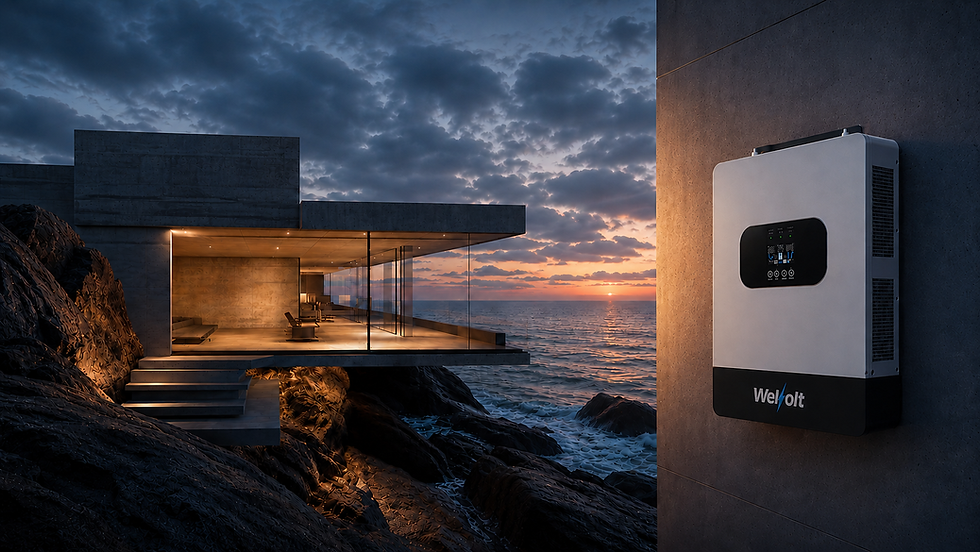
WeVolt brings industrial-grade inverter thinking into residential off-grid applications.
Our focus is not only on power conversion. We focus on high protection, practical performance, long-term reliability and better user experience for homes, installers and distributors.
The goal is simple: make off-grid living more stable, comfortable and sustainable.
Conclusion
Residential off-grid users deserve more than basic inverter designs.
As off-grid living becomes more common, the inverter must become stronger, quieter and more reliable.
Industrial-grade off-grid inverter design is not excessive for residential use. For many users, it is exactly what long-term solar living requires.
FAQ:
Is an industrial-grade inverter suitable for home use?
Yes. Industrial-grade thinking can improve reliability, protection and long-term performance in residential off-grid systems.
Does industrial-grade mean expensive?
Not always. A well-positioned product can offer better protection and reliability without moving into the highest premium price range.
Why should homeowners care about inverter design?
Because the inverter affects daily power stability, noise, reliability and long-term maintenance risk.
CTA:Explore WeVolt industrial-grade off-grid inverters designed for upgraded residential solar living.


Comments