
Why Choose an IP54 Off-Grid Inverter?

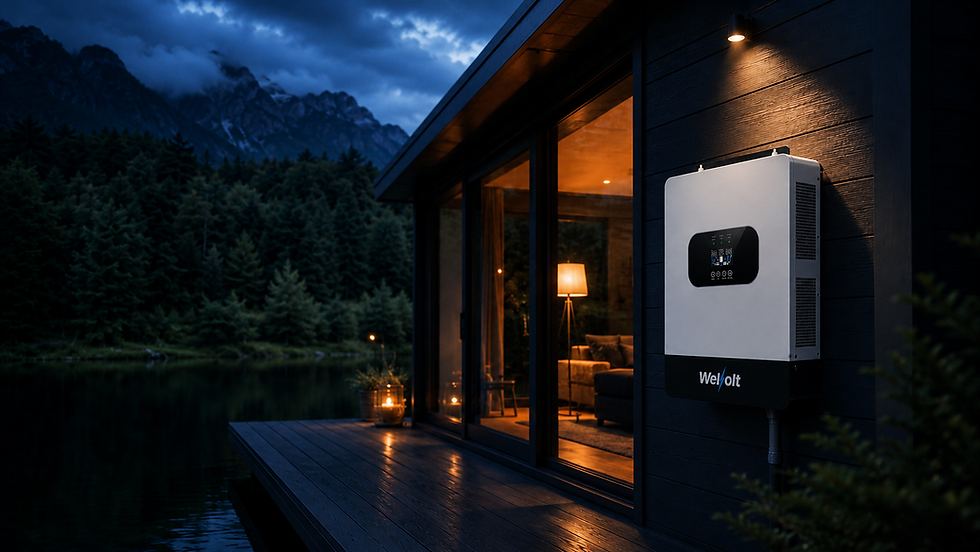
For many off-grid solar users, the inverter is installed in real-life environments: garages, workshops, cabins, farms, storage rooms or technical spaces.
These places are not always perfectly clean, dry or controlled. That is why protection level matters.
An IP54 off-grid inverter is a practical choice for users who want better protection than traditional IP20 designs, but still need an affordable and realistic solution for residential or DIY solar systems.
What does IP54 mean for users?
IP54 protection means the inverter is designed with improved resistance against dust and water splashes compared with basic indoor inverter designs.
For solar users, this matters because the inverter may face dust, humidity, insects or environmental changes over time.
An IP54 off-grid inverter is not only about a technical label. It is about making the system more suitable for real installation environments.
Why IP54 is a smart step up from IP20
Many traditional value-segment off-grid inverters use IP20-style indoor protection. These models can work in clean and dry spaces, but they are less suitable for demanding long-term environments.
IP54 gives users a stronger middle-ground option.
It is especially useful for:
Residential off-grid systems
Cabins
Garages
Workshops
Farms
Technical rooms
DIY solar projects
Installer-led home solar systems
For users who want an affordable off-grid inverter with better protection, IP54 can be a strong choice.
IP54 is about long-term value
Some buyers only compare inverter prices. But the lowest price is not always the lowest cost.
If an inverter creates problems after installation, the total cost can increase through repairs, replacements, downtime or service visits.
An IP54 off-grid inverter helps reduce some long-term risks by improving the physical protection level of the system.
This is especially important for installers. A better-protected inverter can help reduce after-sales pressure and improve customer satisfaction.
Who should choose IP54?
IP54 is a good fit if:
You want better protection than traditional IP20 inverters
You need a more affordable option than higher-premium solutions
Your inverter will be installed in a garage, workshop or utility room
You are building a 48V off-grid solar system
You want a practical balance between cost and reliability
You are an installer looking for a more dependable value-segment product
IP54 vs IP55
IP54 is a practical high-protection choice. IP55 is usually more suitable for users who want stronger protection and quieter operation for a more upgraded residential experience.
If your first priority is affordability with better protection, IP54 can be enough.
If your first priority is quiet operation, stronger protection and long-term residential comfort, IP55 may be the better choice.
WeVolt IP54 positioning
WeVolt IP54 off-grid inverters are designed as an upgraded alternative to traditional low-protection off-grid inverter designs.
They are built for users who want industrial-grade thinking in a more accessible product range.
For distributors and installers, the IP54 series offers a clear value proposition: better protection, practical performance and stronger long-term confidence at a competitive cost.
Conclusion
Choosing IP54 is not about buying the most expensive inverter. It is about avoiding the limitations of basic indoor designs while keeping the system affordable.
For many 48V off-grid systems, IP54 can be the right balance between protection, reliability and cost.
FAQ:
Is IP54 enough for an off-grid inverter?
For many semi-protected residential or technical-room installations, IP54 can be enough and offers better protection than traditional IP20 designs.
Is IP54 suitable for home solar systems?
Yes. IP54 can be suitable for home solar systems, especially when the inverter is installed in a garage, utility room or workshop.
Is IP54 more expensive than IP20?
Usually, IP54 designs may cost more than basic IP20 models, but they can offer better long-term value through stronger protection.
CTA:Explore WeVolt IP54 off-grid inverters for 48V solar systems, installers, distributors and DIY off-grid users.
Tags:
IP54 off-grid inverter, 48V off-grid inverter, high-protection solar inverter, affordable off-grid inverter, WeVolt IP54

Comments